Price list
| Campervan consulting | €90/h |
| Tiny house consulting | €90/h |
| Business and start-up consulting | individually on request |
| Initial consultation | 30 min, donation-based |
| Hands-on work, per hour | on request |
| Travel to and from site | by arrangement |

The floor is, quite literally, the basis of the living space – it stays in the background and is constantly present at the same time. Which floor is the right one is a very individual question. For one person it matters most that the floor is particularly easy to look after, another finds a certain look more important. One person appreciates the naturalness and lively atmosphere of floor coverings such as cork, while to another the grained surface appears rather restless. In a Tiny House, almost any floor covering can be laid. The options in materials and colours are virtually endless.
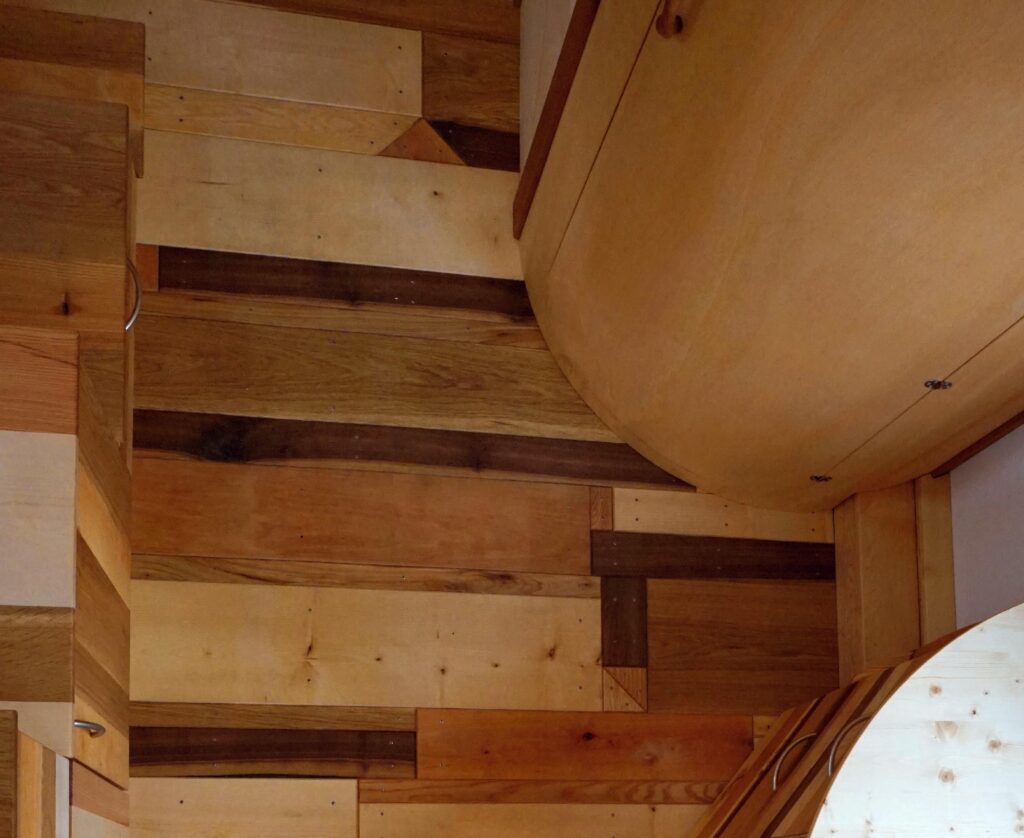
The floor: Floorboards • Cork flooring • Parquet flooring • Vinyl flooring • Tiles| The walls: Panels • Cladding • Clay plaster
Wood, tiles, cork – the floor is an element that takes up a large amount of surface area and therefore has a considerable influence on how a room feels. But it also has to be functional: hard-wearing, robust and easy to keep clean. And how well does the nature of the floor work with the furniture and the objects standing on it?
Which covering suits your build and your everyday life is something I go through with you in the Consulting — including the question of what that means for weight and build-up height.
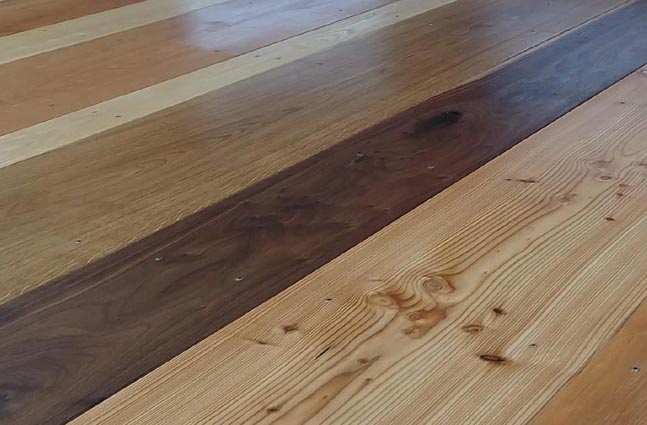
Floorboards are usually made of two-centimetre-thick solid wood. That makes this
floor particularly high-quality, durable and robust. If dents and scratches do appear in the floor, they can be sanded out again with little effort. Floorboards as a traditional floor covering are becoming increasingly popular and have a rather rustic look. They can be soaped or oiled and keep the wood look, or they can be painted in colour.
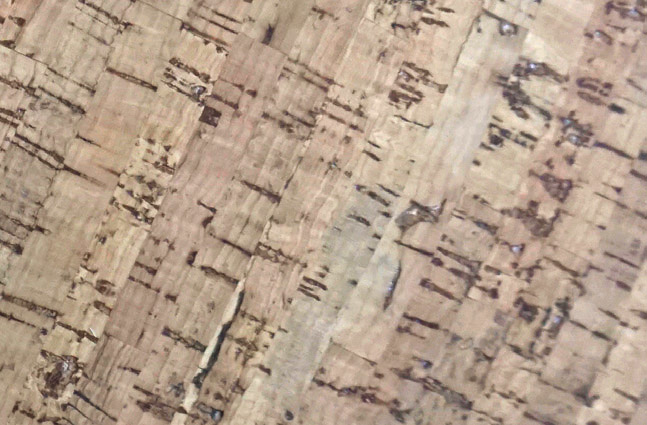
Cork is a natural product obtained from the bark of the cork oak. Cork floors are available in various colours and finishes. The floor is pleasantly warm underfoot and not as hard as wood. It copes well with impacts, but unlike a wooden floor it cannot simply be sanded down and is generally more prone to scratches. I often use a floor made up of a 3 mm thick layer of cork bonded to wooden boards.
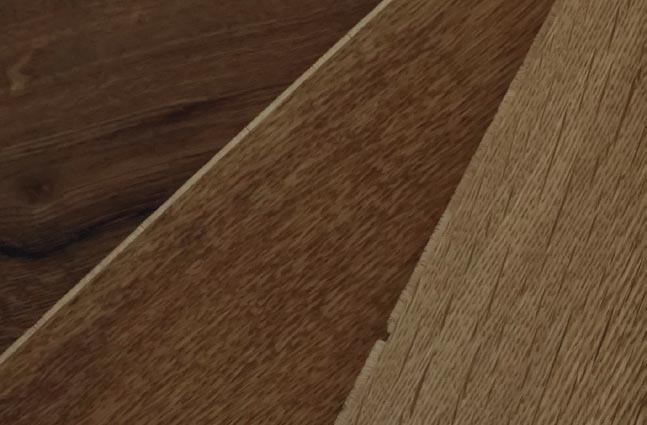
Parquet consists of a multi-layer board whose top layer is made of hardwood. Scratches can only be sanded out to a limited extent, because the hardwood layer is usually only a few millimetres thick. Parquet is available in many different wood species and finishes.
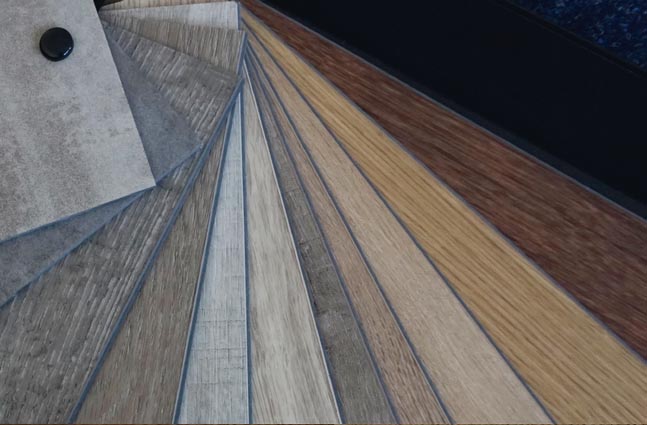
Vinyl is a plastic that offers good properties for floors. It is hard-wearing, water-resistant, warm underfoot and comparatively inexpensive. Vinyl floors are available in a wide range of colours and finishes.
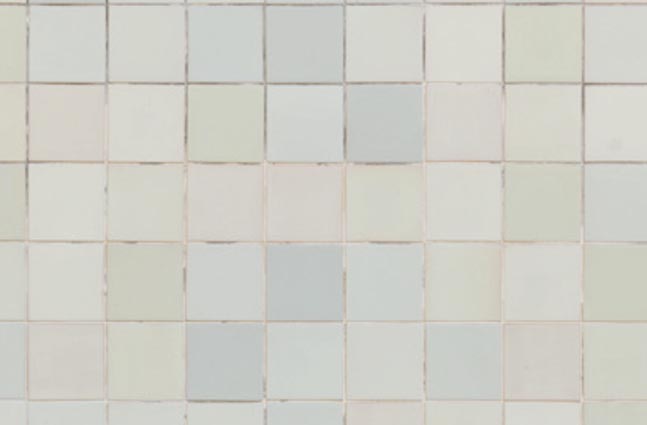
Tiles are a typical and practical
floor covering, above all in the bathroom and
kitchen. However, they are also relatively heavy, which is why with Tiny Houses it is worth weighing up how large the tiled areas should be.
There are several options for the interior walls of the house as well. Which one you decide on is above all a question of personal taste. Do you prefer plain white, or do you find a wood look appealing, for example? Or should it be a cladding of wooden panels?
The simplest solution is to clad the walls with a plain spruce board. This can also be painted with water-based varnish for protection. If you really like the look of wood, this is an attractive and inexpensive solution. It is also possible to paint the wall white. Through the paint, however, the texture of the wood is often still visible. If you want a homogeneous white (or differently coloured) surface, the wall can be wallpapered. The look is then the one you are used to from a normal flat.
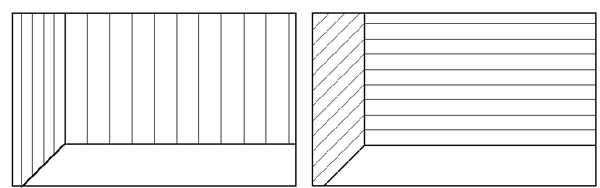
A somewhat more elaborate but attractive option is to clad the walls with tongue-and-groove boards. These are available in many different colours. White is a good choice, though, because it makes the room look brighter. The tongue-and-groove boards can be fitted as horizontal or vertical cladding.
Another option is to plaster the walls with clay. Clay plaster creates a pleasant indoor climate, because it can absorb moisture from the room and release it again. However, this not only leads to higher costs, the weight goes up as well.
Related to this topic: Tips for construction & care | Facade | Insulation | Windows & Doors | Heating | Moisture