Price list
| Campervan consulting | €90/h |
| Tiny house consulting | €90/h |
| Business and start-up consulting | individually on request |
| Initial consultation | 30 min, donation-based |
| Hands-on work, per hour | on request |
| Travel to and from site | by arrangement |

Flat, sloping, pitched, with a dormer or without – there are many roof shapes. Shape and material can vary widely. Personal taste plays a part, but so does weight, to a considerable degree. That is why not every roof covering is suitable for Tiny Houses.
Because roof shape and weight are directly linked, it pays to decide early. In the Tiny House consulting we work through it together, along with transport height and the pitch.
The roof of your Tiny House can be far more than protection from wind and weather: there is room on the roof for solar panels and additional windows, you can collect rainwater up there or build a comfortable roof terrace with a wide view.
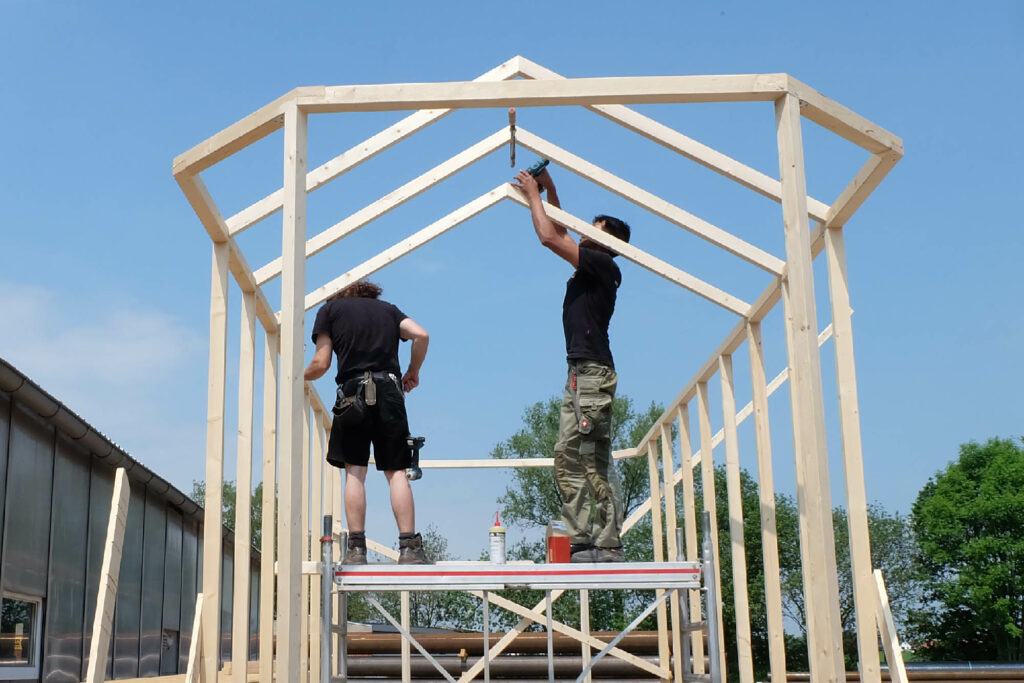
On your next walk through the village, take note of which roof shapes appeal to you. You can also browse the internet and collect pictures.
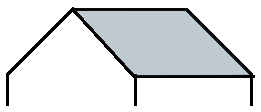
Gable roof
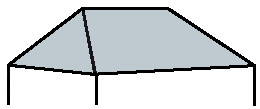
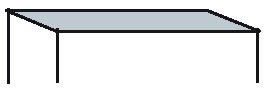
Flat roof
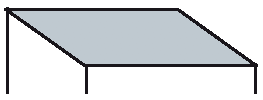
Mono-pitch roof, lengthways
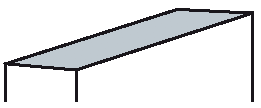
Mono-pitch roof, crossways
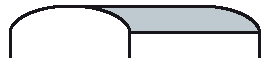
Curved roof
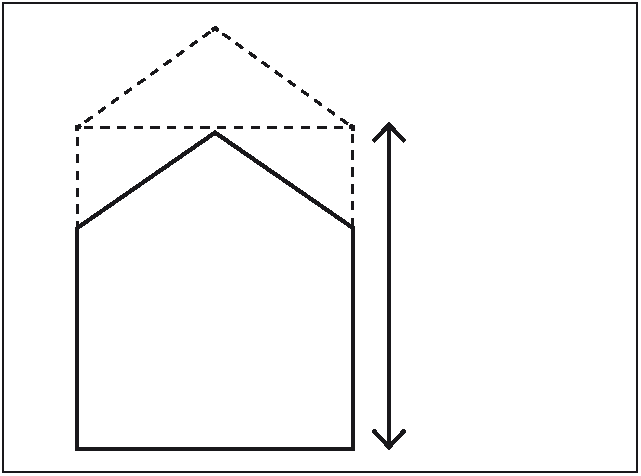
The maximum height refers to the highest point of the house, so depending on the roof shape the wall height at the side walls is reduced accordingly. A flat roof makes full use of the maximum volume; with sloping roofs some space is given up – but in return you may gain a cosy area under the roof, for a bed for example.
A roof can also be delivered separately, which gains you more height and space. The costs for construction, transport and installation increase accordingly, however.
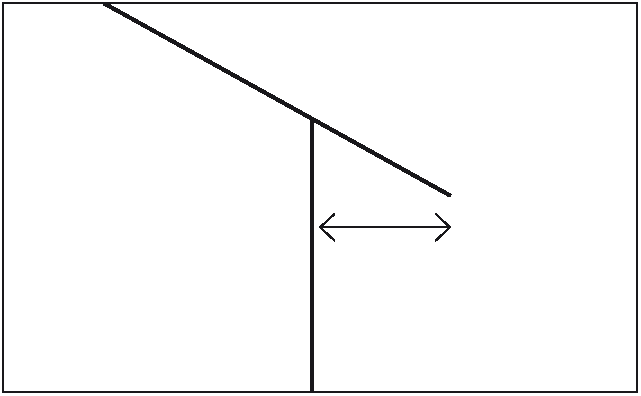
On a Tiny House, a roof overhang is largely a purely aesthetic matter. To protect the façade from weather influences such as rain or UV light, it is only really effective from a certain size onwards, although a small roof overhang at least protects the top edge of the façade from rain. However, the roof overhang counts towards the overall width of the Tiny House and should therefore be kept as small as possible in order to save space.
A flat roof lends itself to a roof terrace. In suitable weather, the roof area can then be used for relaxing. For a roof terrace, decking boards and a railing are fitted to the roof area in addition to the roof covering. The terrace can be reached by stairs from outside or from inside through a window in the roof. The railing can also be fitted on site.
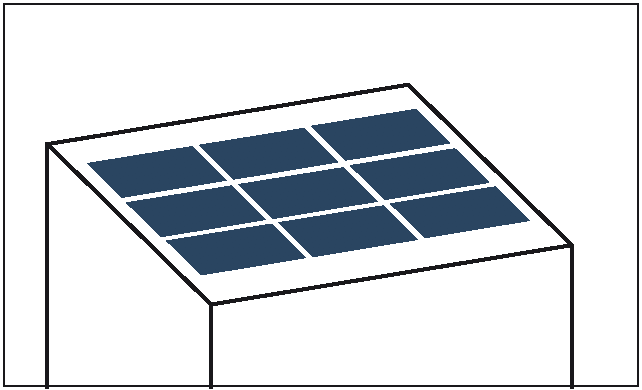
If you want to fit Solar panels to your Tiny House, you need to make sure when planning the house that the roof surface faces south or east as far as possible. That way the systems can capture as much sunlight as possible. A sloping roof shape is an advantage, but not strictly necessary.
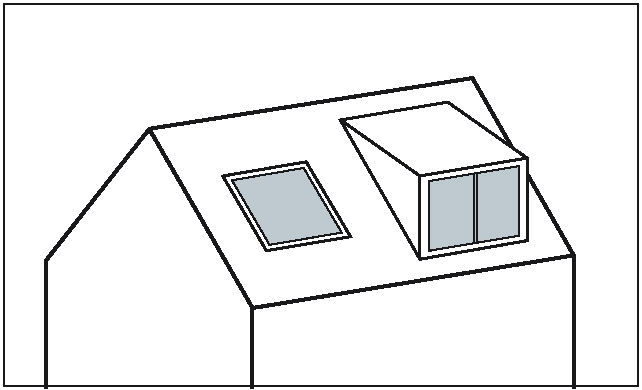
Roof windows let in light from above during the day and at the same time screen the interior from view, which means more privacy. Dormers are possible, but correspondingly more expensive because of the greater effort involved.
You might also be interested in: Regulations | Solar energy | Insulation
The shape alone does not make a complete roof; it also has to be covered. Above all, the material should protect against rain, wind and sun. But the type of roof covering also has a substantial influence on the exterior of the Tiny House – does it look traditional or modern? Does it blend into the landscape or deliberately create a contrast? There is a wide range of materials and design options.
Aluminium is a very durable and lightweight material. That makes it very well suited to the roof covering of a Tiny House. It is easy to shape and can therefore be used in many ways, e.g. for curved roofs or domed roofs. In heavy hail it can dent, although that is only cosmetic damage. Another major advantage of aluminium is its low susceptibility to corrosion. Aluminium withstands all weather and protects itself against corrosion.
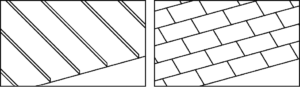
As with all metal roof coverings, the roof should be insulated in order to avoid an increased noise level when it rains.
Many systems use stove-enamelled coatings, which provide additional protection. They are available in many different colours. Aluminium also has a good environmental record: it is 100% recyclable and reprocessing requires only 5% of the energy needed for production.
Standing seam sheets can be laid in long lengths or applied in the form of smaller shingles, so that the thermal expansion of aluminium does not come into play. Roofs with a relatively low pitch can also be covered this way; at least 7°C is recommended. A roof covering of standing seam sheets is relatively expensive, due to the material and also the longer working time when laying it. With Tiny Houses, at least, there are no large areas to cover.

Zinc is a metal with a bluish-white colouring. It works well for roof coverings, because it is stable, hard-wearing and easy to work with. Like aluminium, it forms a natural patina that protects it from
corrosion. Zinc is also scratch- and impact-resistant, which makes it a long-lasting roof covering that needs hardly any maintenance.
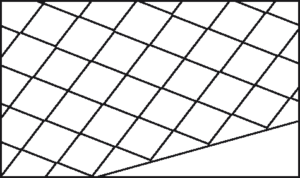
The environmental record of zinc is likewise relatively good. It is heavier than aluminium, but still relatively light, which saves weight and lowers emissions during transport. Zinc can equally be 100% recycled. The disadvantages of zinc roof coverings are that a minimum roof pitch is required for correct laying. The material is also relatively expensive.
This roof covering consists of profiles made from steel or aluminium. It is relatively inexpensive and also suitable for flat roofs. The material the trapezoidal sheets are made from is very durable and copes with extreme temperatures as well.
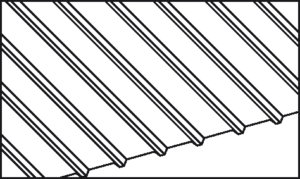
Whether steel or aluminium is the better choice also depends on the site. Steel is somewhat more susceptible to corrosion; to prevent this, the steel sheets are given several coatings. If even better corrosion properties are needed, at coastal sites for example, aluminium is the better choice. Aluminium, on the other hand, is somewhat more problematic when it comes to deformation. The material is considerably softer, which makes it more prone to storm and hail damage. Aluminium also expands in heat, which can cause noise when large sheets are laid and, if laid improperly, can also lead to damage. In return, aluminium sheets in particular are relatively light, which has a positive effect on the weight of the Tiny House.

The material is weather- and frost-resistant and unaffected by UV radiation, ozone and mild acids. That makes it a very long-lasting roof covering which lasts up to 50 years without maintenance. The plastic itself is environmentally compatible: it releases no substances into the environment and is also completely recyclable. The EPDM membrane is additionally root-resistant, which is why it is suitable as a substrate for green roofs. With planting, however, the higher dead weight of the roof has to be taken into account.

Classic roof coverings such as fired clay roof tiles, fibre cement panels, stone shingles and slate roofing are essentially out of the question for Tiny Houses. They are simply too heavy. Sometimes regulations can also be got around cleverly: instead of tiles, for example, tile-effect metal roofing sheet (see background) can be used.
You might also be interested in: Regulations | Solar energy | Insulation