Price list
| Campervan consulting | €90/h |
| Tiny house consulting | €90/h |
| Business and start-up consulting | individually on request |
| Initial consultation | 30 min, donation-based |
| Hands-on work, per hour | on request |
| Travel to and from site | by arrangement |

By the winter months at the latest, living at our latitudes without heating is unthinkable. While in a conventional home you usually need not give the heating system much thought beyond the running costs, an individually designed Tiny House calls for a closer look at the full range of heating options.
Which heating system suits your house depends greatly on how off-grid you want to be. We look at that in the Consulting together with your power concept.
Whether electricity, gas, oil or wood — which solution is best in each individual case depends on the fit-out and the use of the space, but also on your daily routine, your requirements and your own preferences.
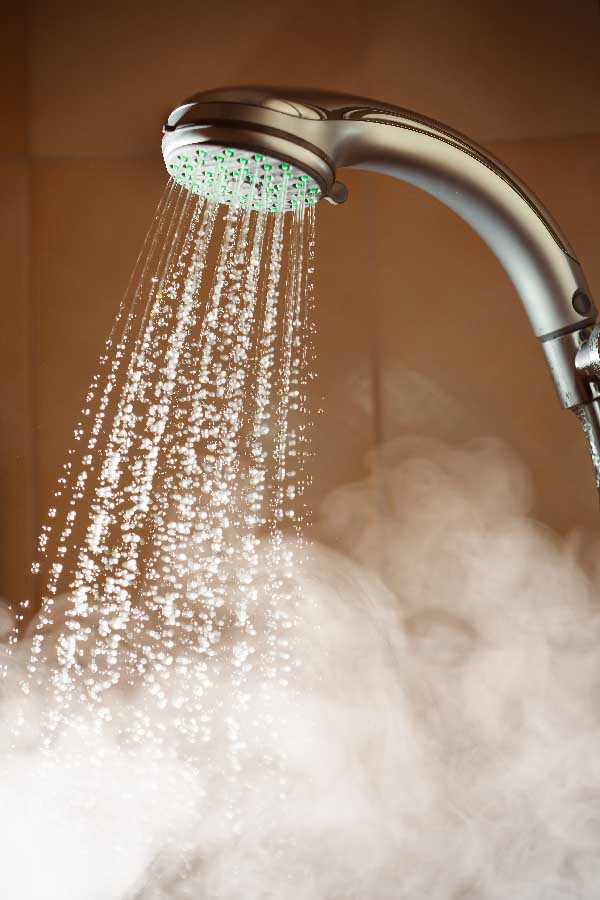
In a small house, however, heating is not the only requirement: you also need hot water – in summer just as much as in winter. There are various systems for this, each with its advantages and disadvantages.
A stove takes up a lot of room: inside the house a minimum clearance to the wall and to combustible components has to be maintained. To burn the wood properly, the stove needs oxygen. This air can come from the living space or from outside through an external air supply, which is worth having if the stove is used regularly, since otherwise the oxygen content in the room drops quickly and, in the worst case, carbon monoxide can build up in the room. This is an odourless, colourless gas that is lethal above a certain concentration. With a stove that has no external combustion air supply, a window should therefore always be open.
A carbon monoxide alarm can also be installed as additional protection. The stove and the flue pipe should be installed by a specialist and signed off by the chimney sweep, because faulty installation can likewise allow carbon monoxide into the living space.
If you want to use a stove as your heating, it can also cover the hot water supply, provided the right model is fitted. Such models are usually somewhat larger, though. You also have to wait longer for hot water unless you install a storage system, which again takes up a lot of space. And in summer, heating the water warms the house up unnecessarily.
With a centralised hot water system, water is carried from a hot water cylinder to the various draw-off points. Because the hot water is kept constantly at a preset temperature, it is available immediately when needed. However: once the cylinder is empty, there is no hot water either. Fairly large cylinders (at least 150 l) are therefore needed, and they take up a lot of space. That makes this solution only partly suitable for a Tiny House.
With decentralised systems, a small storage tank or instantaneous water heater is fitted where the water is actually used. The short pipe runs save both energy and water. Since a Tiny House usually needs only one water heater for the kitchen and bathroom together, the essential difference is that centralised systems always keep a certain amount of hot water on standby, whereas decentralised systems heat the water on demand.
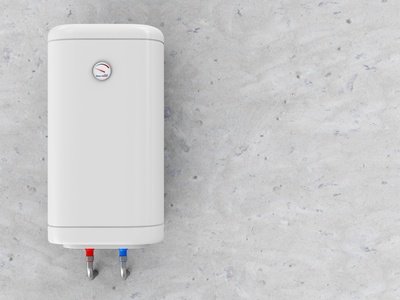
Electric storage water heaters are cheap to buy and to run. In return, they always have to be switched on before hot water can be drawn off, and they switch themselves off again afterwards. They heat only as much water as they can hold; once that amount is used up, you have to wait for fresh hot water. Like electric instantaneous water heaters, they work independently of the water pressure.
An instantaneous water heater is a good choice in a Tiny House, because it is very space-saving and no large hot water tank is needed. Instantaneous water heaters can be run on electricity and, in principle, on gas as well. If hot water demand is not very high, they are also very economical in energy terms. The capacity of this solution is limited, however, so for a household with several people it is usually not the best option.
… work in relation to the water pressure. The higher the pressure, the hotter the water. If the water pressure drops, because another tap is turned on for example, the temperature fluctuates. They are cheaper to buy, but more expensive in use, because a certain amount of water always has to flow through. The unit works at half or full load; more specific intermediate settings are not possible.
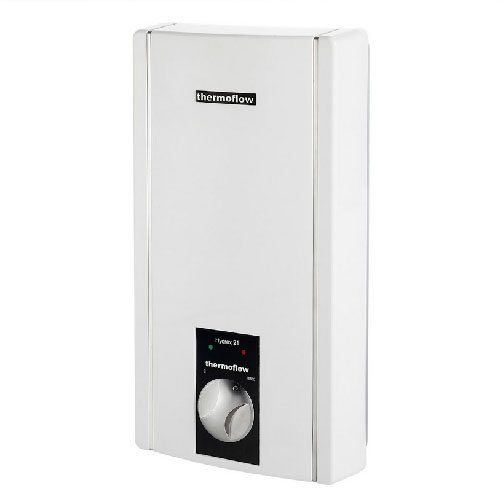
… work independently of pressure and can therefore heat small quantities well too. The desired temperature can be set precisely, or is at least adjustable in steps. They are less prone to disruptive fluctuations in water temperature than hydraulically operated instantaneous water heaters. They cost a little more to buy, but they save water and energy.
Links: Off-grid living | Moisture


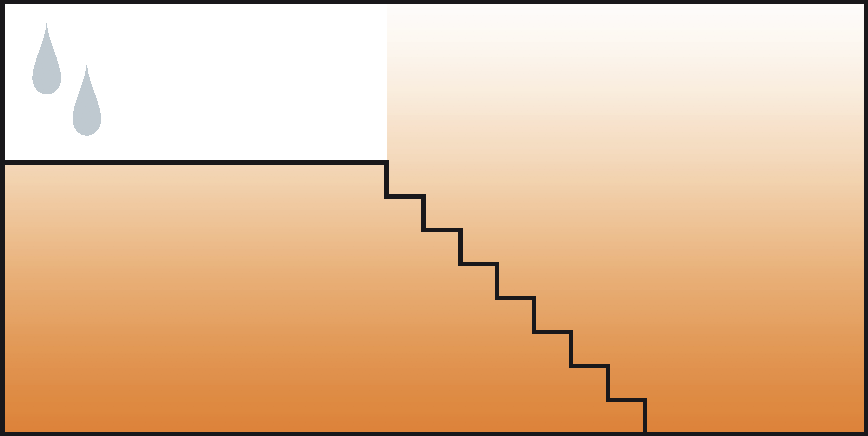
The layout of the Tiny House also affects where the heating is positioned. On loft levels, warm air cannot simply reach the space by rising. Cold corners can form, where condensation settles and mould can develop. A small additional heater, heat exchange systems or automatic ventilation systems can remedy this.

They heat the air and distribute it by creating air currents. Convection radiators are classically water-filled radiators, usually installed under the window. The water is heated with wood, electricity, gas or oil.
Convection radiators are usually cheap to buy, but they have a high flow temperature and high energy consumption. The warmed air is quickly lost when the room is aired, and dust is stirred up.
The water heated in the gas combi boiler is fed through radiators and thus warms the living space. With this type of heating, space has to be allowed for a boiler inside. Although gas heating also consumes fossil fuel and releases CO2 when it burns, it is more environmentally friendly than oil. Combined with heat exchangers, up to 98 % of the energy in the fuel can be used.
Heat exchangers are add-on devices that transfer energy from one medium to another without contact and thereby increase the efficiency of a standard gas combi boiler. This saves energy and heating costs, because the boiler's flue gases can also be used to heat the water for the heating system.
Air conditioning units are another way of heating with electricity. They provide both heating and cooling functions and consist of two units, one to be mounted outside and one inside. Some units include an air filter that cleans the air of micro-organisms such as bacteria, fungi and viruses. Modern air conditioning units are almost silent, energy-saving and can be controlled remotely by handset or smartphone. Some units have occupancy and activity sensors and detect sunlight, so their output can be matched optimally to the conditions in the room.
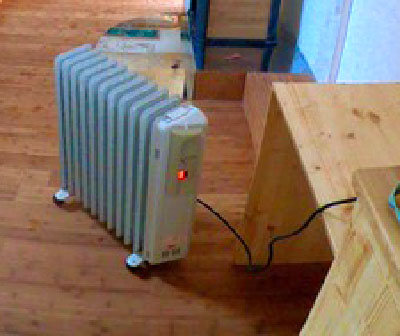
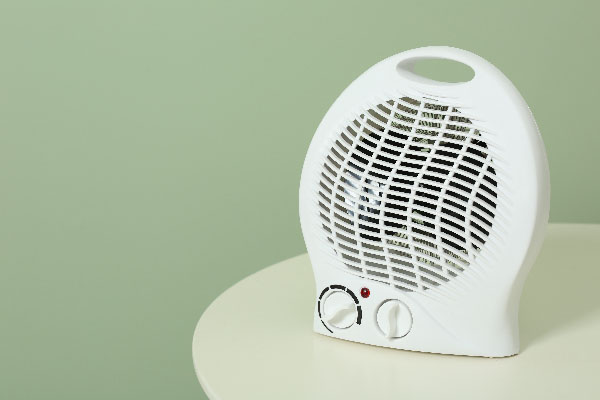
Fan heaters have a high output; they heat the room air directly and warm the room quickly, but only for a short period. A thermostat provides an automatically adjustable cut-off point. Most are run on electricity. Some models run on LPG or other fuels and are more economical in energy terms than electric ones. As a stand-alone heating system, however, the costs would be too high. On cold days they can nevertheless provide quick and effective relief as a supplementary heater.
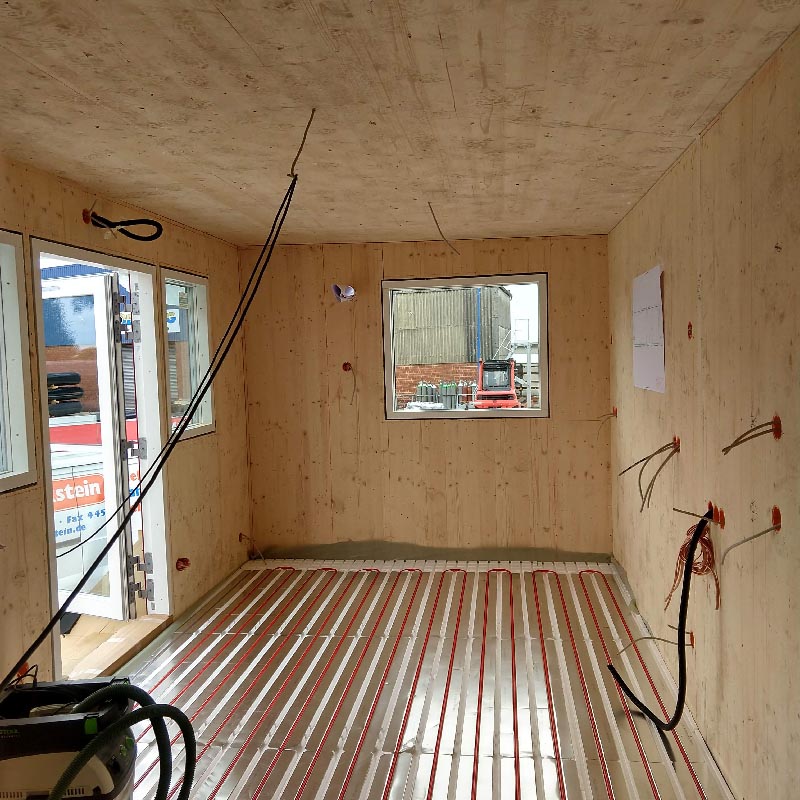
Instead of heating the air, these systems heat a building component that gives off the heat to the room over several hours. Classic examples are underfloor, ceiling and wall heating and tiled stoves. The energy advantage is that, unlike conventional heating, the flow temperatures are only half as high and therefore cheaper. They give off a pleasant warmth and no dust is stirred up.
Underfloor heating is an excellent fit for a small house. It can be run with water flowing through a pipe system beneath the floor, or with electric heating elements laid under the floor in the form of heating cables. There are also heating foils that are laid under the floor covering and, because they need so little space, are particularly suitable for Tiny Houses. The energy yield is very high, since almost all of the energy is converted into heat.
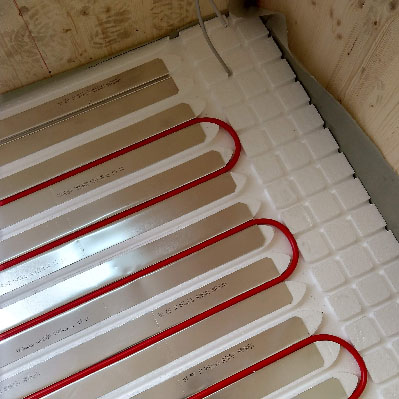
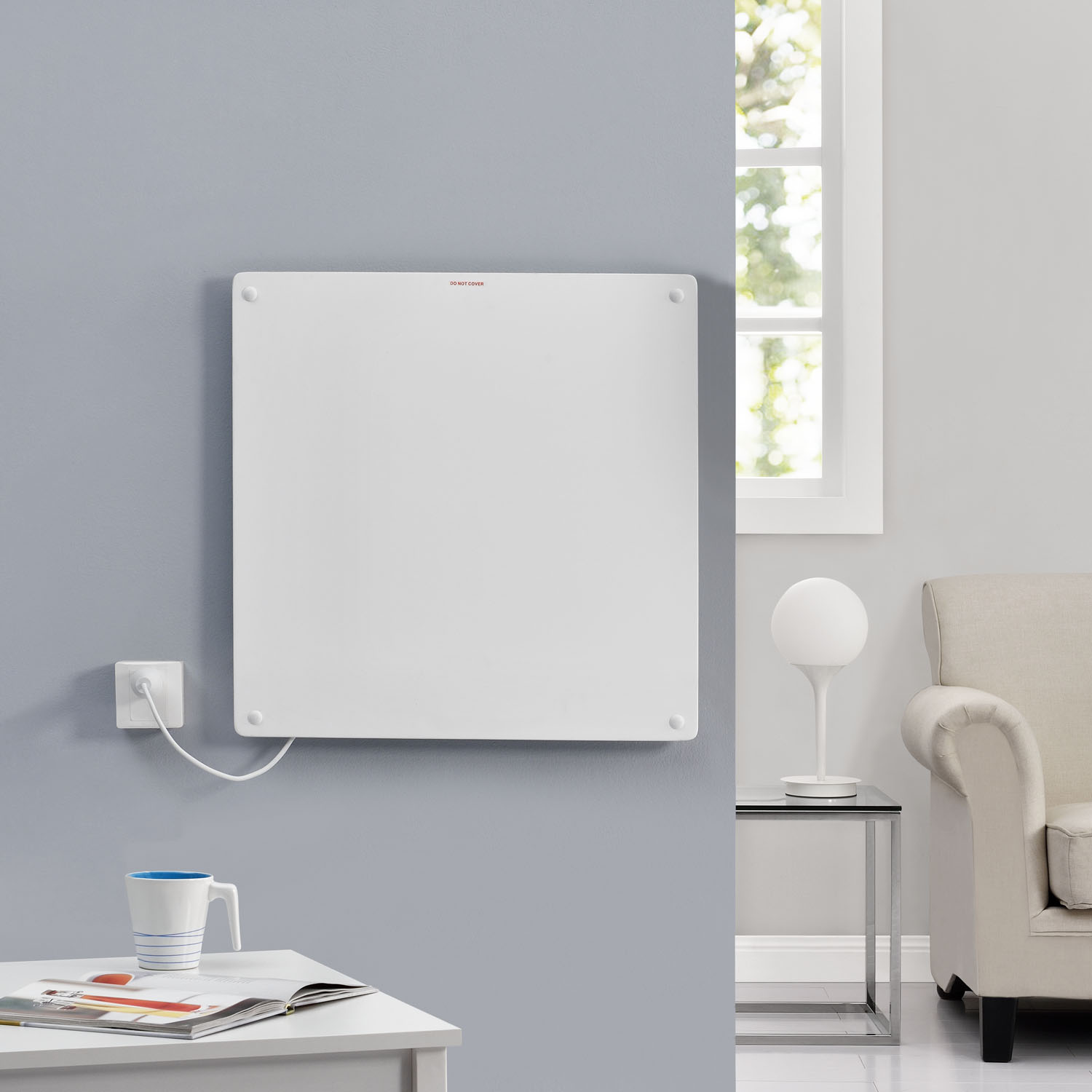
Infrared heating can be used as underfloor heating or fitted compactly to walls or ceilings. A wall-mounted heating system requires a clear area that must not be covered by furniture. There are, however, heating panels that fit into the room discreetly and attractively as a picture or a mirror. In the loft they are often used as supplementary heating. They produce a pleasant warmth, are energy-efficient and ecologically sustainable. The area immediately around them becomes pleasantly warm quickly, so there is no need for lengthy pre-heating. There is no fire risk, but you should not touch the heating surface for too long.
Radiant heaters are devices that emit heat radiation. Depending on the model, they are run on electricity, LPG or other fuels. To produce radiant heat, a filament is heated to a high temperature and then emits heat radiation (infrared light) into its surroundings. Their strength lies not in heating large rooms but in warming their immediate surroundings quickly and effectively, which is why they are well suited for use as supplementary heating.
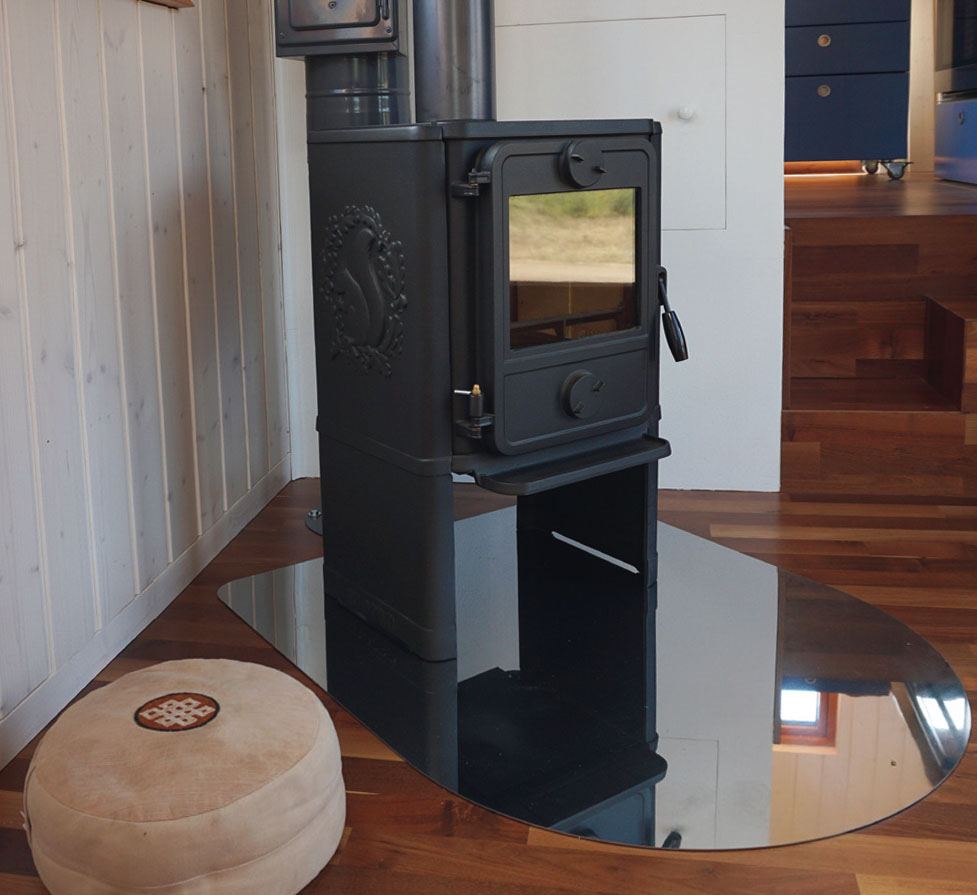
Wood-burning stoves heat with a renewable fuel and create a cosy atmosphere. If one is to be used as the sole heating system in a Tiny House, however, there is a good deal to consider. Standard wood-burning stoves have so much output that a small room quickly becomes too warm and you have to open the windows, which is hardly sparing on resources. Running the stove at the edge of its output range, on the other hand, can cause damage: it starts to smoke and becomes very maintenance-intensive. A model should therefore be chosen that matches the size of the house.
The heat from a stove warms only the room it stands in. If the bathroom is to be heated as well, for example, the door has to be left open. Small corners in the loft or in a bay may not be reached either. Condensation can form there and mould can develop. A heat exchange system or a supplementary heater can help here. Stoves are generally not suited to continuous operation. While you are away the stove should stay off, which means finding a room that has cooled down when you next come in or in the morning.
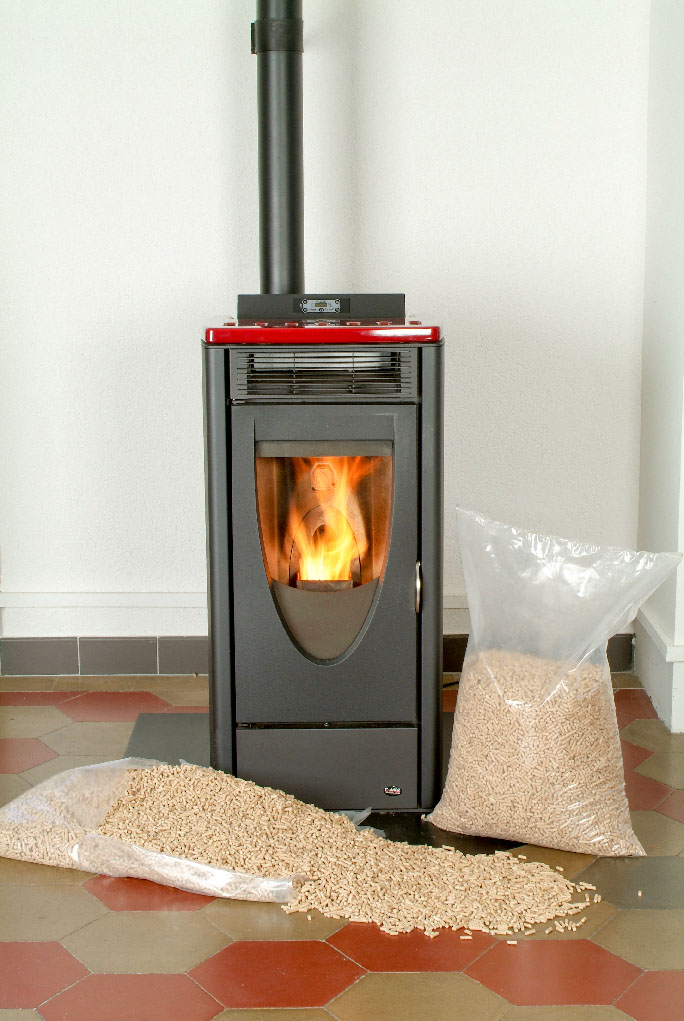
In principle a pellet stove has very similar characteristics to a wood-burning stove, but it is fired with wood pellets. These are small rods of 4–10mm diameter made from wood waste and wood shavings, which makes running the stove fairly sparing on resources. You also get a consistent heat output and can regulate it well.
Pellet stoves have a pellet hopper that is filled with pellets. You enter the temperature you want and the stove draws the required quantity of pellets automatically. Thanks to this automation, the stove can to some extent heat while you are away, provided there is an air supply. Overall, heating is more convenient, as there is no lighting up and no adding of logs. Storing the pellets is also simpler and more space-saving, since they can always be used straight away. A dry storage place is nevertheless required. Pellets are somewhat more expensive than logs, as are the stoves themselves. They also need a relatively large amount of maintenance. Heating at an efficiency of 90 % is more efficient, which in a Tiny House, as with the wood-burning stove, can also be a problem. The fact that a pellet stove is slightly louder than a wood-burning stove because of the noise of the combustion fan bothers some people, while others quickly get used to the background noise and later stop noticing it altogether.
The flame picture is different too, and the viewing window is usually smaller than on a wood stove. Because of the pellet hopper, the stoves are often somewhat larger than wood-burning stoves. They are available as free-standing stoves or connected to a central heating system. Water-filled pellet stoves that can be used as a heating system are not really suitable for Tiny Houses, however, as they need a very large buffer cylinder. Proper wood pellet boilers are also very loud and are therefore often housed in a separate room in family homes.
You might also be interested in: Moisture | Insulation| Off-grid living