Price list
| Campervan consulting | €90/h |
| Tiny house consulting | €90/h |
| Initial consultation | 30 min, donation-based |
| Hands-on work, per hour | on request |
| Travel to and from site | by arrangement |

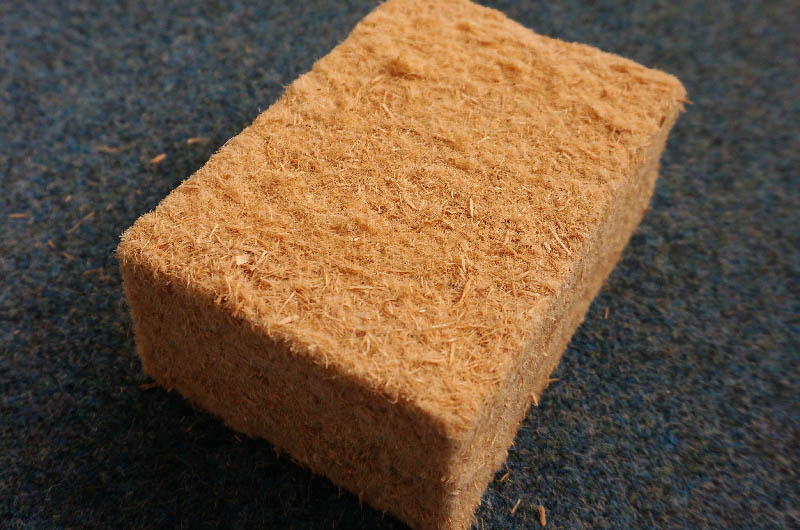
Wood has been used as a building and construction material for centuries and is one of the oldest industrially produced natural insulation materials. Insulation boards are made largely from wood residues from industry and, in part, from trees felled during thinning that are too thin for structural use. Softwoods are preferred because they have longer fibres than hardwoods. The wood is reduced to wood chips, which are boiled and broken down in mills. The fibres obtained in this way can be pressed into boards using either a dry or a wet process. In the dry process, adhesives or synthetic resins are added to ensure cohesion, whereas in the wet process, in which the fibres are first boiled into a pulp and then dried, no additives are required, because the wood's own lignin bonds the fibres together. Boards produced using the wet process are, however, thinner. In some cases, substances containing bitumen or resin are added in order to achieve better moisture resistance. The thermal conductivity of wood fibre boards is relatively good at 0.04-0.045 W/(Km3), and the heat storage capacity is again quite high. They therefore offer protection against cold as well as against overheating in summer. The vapour diffusion resistance, at 3-5, is somewhat higher than that of hemp and jute, and the required insulation thickness, at 18 cm, is also somewhat greater. The boards permit moisture absorption of up to 20 % of their own weight without damage and without losing their insulating effect. Wood fibre boards also have very good sound-insulating properties. Their disposal is likewise fairly unproblematic.
One disadvantage is that wood fibre boards are relatively expensive. In addition, their production consumes a relatively large amount of energy compared with other ecological insulation materials (600-785 kWh/m3 primary energy demand). Not least, at 170-230 kg/m3 they are also relatively heavy, which is an important factor particularly for a Tiny House.